Category: News

Iain Edwards appears for defence of Khaled El Hishri before the International Criminal Court

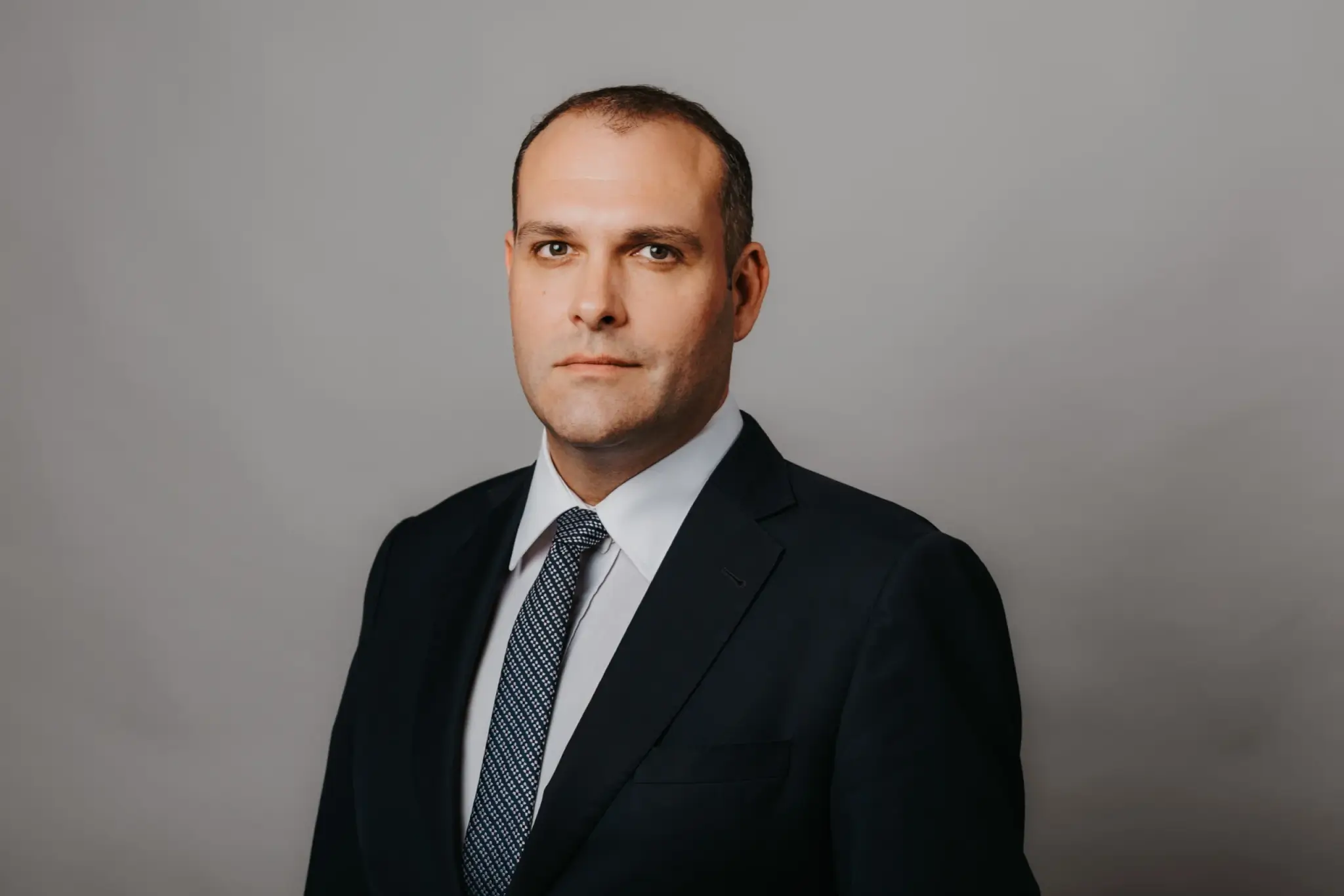
Iain Edwards, appointed as associate counsel by the International Criminal Court and led by Yasser Hassan of the Cairo Bar, has appeared for the defence of Khaled Mohamed Ali El Hishri before Trial Chamber VII. The hearing was Mr El Hishri’s first status conference since the charges against him were confirmed in July 2026.

Iain was first appointed to the case in January 2026, shortly after Mr El Hishri was transferred to The Hague following his arrest in Germany.

Mr El Hishri is alleged to be a senior official of a Libyan group called the Special Deterrence Force, or RADA, and is accused of having been one of the leaders of the notorious Mitiga Prison in Tripoli. He is charged with 17 counts of war crimes and crimes against humanity, including unlawful imprisonment, murder, rape, torture, enslavement and persecution.

This is the first case arising out of the situation in Libya in which an accused person has actually appeared before the ICC. In addition, the Libyan situation is only the second to have been referred to the ICC by the United Nations Security Council in respect of a State that is not a party to the Court’s Statute (the first being the situation in Darfur, Sudan, a case in which Iain is also instructed).

This case has provided the Defence with an unprecedented opportunity to challenge the Court’s exercise of jurisdiction on the basis that UNSC Resolution 1970 does not extend to the crimes of which Mr El Hishri is accused. The Defence has also argued that the Libyan Prime Minister’s declaration of acceptance of the Court’s jurisdiction under Article 12(3) of the Rome Statute is unlawful. The jurisdiction challenge is under appeal.

Any trial is likely to start in 2027.

Bryan Cox KC secured not guilty verdicts at Birmingham Crown Court on charges of conspiracy to murder

Bryan Cox KC secured not guilty verdicts at Birmingham Crown Court on charges of conspiracy to murder, conspiracy to cause grievous bodily harm and attempted murder arising from Operation Lomtrex, a major West Midlands Police investigation into organised criminality. The prosecution alleged that the defendant was a ‘key player’ in a London-based Organised Crime Group engaged with carrying out a series of planned ‘hits’ on individuals across the Midlands. The jury acquitted the defendant on all counts following an eight week trial.


Bryan Cox KC was instructed by Graceon Law Solicitors

David Langwallner secured unanimous not guilty verdicts in a multi-count trial at the Inner London Crown Court

David Langwallner secured unanimous not guilty verdicts in a multi-count trial at the Inner London Crown Court involving allegations of controlling and coercive behaviour and assault occasioning actual bodily harm.

The case required the careful analysis and systematic challenge of the numerous allegations made by the complainant concerning the parties relationship over an extended period. The jury returned unanimous not guilty verdicts.


David was instructed by Criminal Defence Solicitors 

Miranda Grell acts in successful ‘priority need’ homelessness appeal involving the protected characteristics of sexual orientation and race

On the 4th of August 2026, His Honour Judge Monty KC (“HHJ Monty KC”), sitting at the Central London County Court, handed down his judgment in the case of Clarke v Royal Borough of Greenwich, a homelessness appeal brought under section 204 of the Housing Act 1996. HHJ Monty KC allowed the appeal. 1MCB’s Miranda Grell acted for Mr Clarke, the Appellant. Miranda was instructed by JI Solicitors.


Background to the appeal

In August 2025, Mr Clarke became homeless. He made a homeless application to his local council, the Royal Borough of Greenwich (“the local authority”), to try and obtain housing assistance.

In the vulnerability questionnaire that Mr Clarke completed as part of the local authority’s enquiries into whether he was in ‘priority need’ under section 189 of the Housing Act, Mr Clarke wrote:

“I am a Black gay man with no family support. Cultural and identity factors mean I cannot rely on family for care or accommodation, leaving me isolated and significantly more vulnerable than most applicants.”

After the local authorities completed its enquiries, it decided that Mr Clarke was not in ‘priority need.’

Mr Clarke requested a review of the decision (“the section 184 decision”) not to find him in priority need. His solicitors made representations about his mental health and/or suicidal ideation but they did not make any additional representations about Mr Clarke’s sexual orientation and/or race.

Following the local authority’s review conducted under section 202 of the Housing Act 1996, it upheld its section 184 decision not to find Mr Clarke in ‘priority need.’

Mr Clarke appealed to the County Court.


The Appeal

Mr Clarke’s grounds of appeal were essentially that the local authority failed to take into account his protected characteristics as a Black and gay man and the increased risk to him as a Black gay man if and when homeless.

In support of his grounds of appeal, Mr Clarke’s solicitors filed a detailed witness statement appending independent reports that provided verified, statistical data on the increased risk to people who are LGBTQIA+ when they are homeless, in the UK and abroad.

The reports further highlighted the even greater risk to homeless gay and queer people who from Black and Minority Ethnic backgrounds.

Even though Mr Clarke’s solicitors had not raised his protected characteristics of sexual orientation and/race in the representations they had made to the local authority, following the section 184 decision, HHJ Monty KC allowed Mr Clarke’s appeal.

HHJ Monty KC held at paragraphs 64 to 70 of the judgment that:


64. It is also clear that the review request did not raise – expressly – issues of race or sexual orientation. I have set out what was said in that request earlier in my judgment.


65. I accept that when considering a section 204 appeal a court should be wary of imposing on the officer a duty to enquire into matters that were not raised in the course of the review: see Cramp and the passage at [14] to which I have referred earlier.


66. However, it seems to me that when conducting a review, the officer cannot ignore matters which are not expressly raised in a review request on the grounds that the matters were dealt with in the section 184 decision where those matters are so intertwined with those which have been made the subject of a review; to do so – and in particular, not even to mention those matters on review – would in my view be an error of law.


67. In my judgment, the officer has unfortunately fallen into error here. There was a failure to reference in the review decision Mr Clarke’s protected characteristics and how they might relate to Mr Clarke’s depression and suicidal ideation. If that was because the officer felt no need to do so because it had been adequately dealt with in the section 184 decision, it seems to me that the least the officer should have done would have been to say just that.


68. The protected characteristics of this particular individual either did or might directly impact on the risk of being homeless in a way which arguably is greater for Mr Clarke than (for example) a white straight man. I say this irrespective of the information in the three additional documents, although it seems to me that these underline this point. The failure to mention these matters, and how in the view of the officer they might or might not impact on the question of vulnerability, was in my view an error of law.


69. These matters are not new in the sense of being raised for the first time on appeal; they are inherently connected to the question of Mr Clarke’s vulnerability. In my view it was incumbent on the officer to have considered them even if they were not expressly raised in the review request.


70. It might have been different if, for example, Mr Clarke had raised his ethnicity and sexual orientation as relevant matters for the first time in the context of this appeal; but he did not. It was always a central part of what he was saying to the Respondent. I accept of course that the weight to be given to any particular matter is for the Respondent, but if a matter is simply not mentioned, it is impossible to say that any consideration has been given to it at all.”


The full judgment of Clarke v Royal Borough of Greenwich is available to read and download HERE.


Miranda Grell is a barrister in 1MCB’s civil team. Her profile is available to read HERE.



1MCB Chambers announces significant expansion with the addition of 13 Members and 2 Clerks

1MCB Chambers is pleased to announce that with effect from 3 August 2026, 13 members and 2 clerks from the former Staple Inn Chambers will joining 1MCB.

The addition of these experienced practitioners broadens and strengthens Chambers expertise across crime, family, immigration, housing and civil, complementing our established practice areas and further enhancing the breadth of specialist legal services available to our professional and lay clients.


Founded in 1977, 1MCB formerly 8 KBW, has remained committed to excellence in advocacy, access to justice and representing all sectors of the community. The members and clerks joining share those values and their arrival reinforces Chambers commitment to delivering high quality legal representation through a strong, collegiate and multidisciplinary set.


Following the move, the former Staple Inn members will practice as members of 1MCB supported by experienced clerks ensuring continuity of service and maintaining the strong professional relationships they have established with solicitors and other professional clients. Existing instructions and ongoing cases will continue without interruption. Clients will continue to receive the high standard of service they expect, with the added benefit of access to the wider expertise, broader range of practice areas and enhanced resources available across 1MCB.


We are delighted to welcome our new colleagues and look forward to the contribution they will make as Chambers continues to develop, grow and strengthen its multidisciplinary practice for the benefit of clients, professional users and the communities we serve.

Jemma Levinson secures a swift unanimous acquittal for a defendant charged with wounding with intent (s.18) and unlawful wounding (s.20)

Jemma Levinson secures a swift unanimous acquittal for a defendant charged with wounding with intent (s.18) and unlawful wounding (s.20). D and her partner (C) were involved in an altercation during which time D stabbed C. D’s case was that she was acting in self defence but inflicted actual wound accidentally. The trial lasted 6 days. The jury acquitted in one hour and 30 mins.

Jemma was instructed by Michelle Simpson from Amosu Robinshaw Solicitors

David Langwallner secures Acquittal for Defendant with multiple charges of Rape, suffocation, Controlling and Coercive behaviour & ABH

The case involved the novel issue of penetration during sleeping and an analysis of the implications of explicit text messages in a marital relationship, complex travel and living arrangements and the determination of a locus in quo within a narrow spectrum of time in a volatile and coercive relationship.

The case was listed at Snaresbrook Crown Court and  lasted for 7 days.

David Langwallner was Instructed by Emmanuel Udu from Dorian and Co Solicitors.

Michael Chambers Secures Not Guilty Verdicts After Defence Challenges Assumption Driven Investigation Following 5 Days in the Snaresbrook Crown Court

A defendant accused of exposure and breaching a Sexual Harm Prevention Order was unanimously acquitted at Snaresbrook Crown Court. After a 5 day trial the defence exposed major investigative omissions and demonstrated that the identification evidence was unsafe. The police had fixed on the defendant following a Jigsaw match from an unrelated incident the next day, but failed to obtain CCTV, phone data or alternative suspect enquiries. With detailed preparation by Dobsons Solicitors, the defence showed that the Code D procedure operated as confirmation rather than testing, and that the complainant—who gave sincere evidence—was a truthful but mistaken witness. The defendant, who had documented mental health vulnerabilities, gave evidence and explained the context of his no comment interview. The jury returned unanimous acquittals on both counts.

Michael Chambers was instructed by David Nicholson of Dobsons Solicitors.

Phil Romans Instructed in 5 Week Terrorism Trial at the Central Criminal Court

Phil Romans, instructed by TSABI Law, recently acted as defence counsel in a complex 5-week trial at the Central Criminal Court (Old Bailey), representing one of six defendants in a case involving aggravated arson and serious offences under the Terrorism Act 2000 and the National Security Act 2023.

The case involved attacks on property and individuals at the behest of the Wagner Group, a terrorist organisation closely connected to the Russian state. One attack targeted an operation in east London supplying goods to Ukraine. The trial at the Central Criminal Court attracted considerable national and international media attention. 

For article click here


Client Acquitted on All Charges Following Legal Argument by Derek Barry

Derek Barry represented a client facing a serious four-count indictment, including allegations of assault by penetration and sexual assault on a stranger in London late at night. The case was heard at Wood Green Crown Court.

Following robust written and oral legal submissions made by Derek, the Crown Prosecution Service offered no evidence on the second day of trial. As a result, the judge directed not guilty verdicts on all four counts.

Derek was instructed by David Battaliou of Richard Body Law

1MCB Announcement: Matthew Hunt Joins as Tenant

Matthew Hunt

We are pleased to announce that Matthew Hunt has commenced tenancy at 1MCB Chambers following successful completion of a probationary tenancy. Before coming to the Bar, Matthew was a teacher and lecturer, and he brings to his practice a distinctive ability to communicate complex ideas with clarity and conviction. His recent cases have involved serious and sensitive matters, including human trafficking, sexual offences, and public law challenges. We look forward to his continued contribution to Chambers.